Sunday, December 16, 2007

Atonement: Bending Reality (Spoilers!!!)


“Luke, you're going to find that many of the truths we cling to... depend greatly on our own point of view.”
-- Obi-Wan Kenobi from Star Wars: Return of the Jedi

“I am very, very sorry for the terrible distress that I have caused you. I am very, very sorry...”
-- Briony Tallis from Atonement

What we think we see is not always what we see. This is the central theme of Joe Wright’s astonishing film version of Ian McEwan’s Atonement. Christopher Hampton (Dangerous Liaisons and The Quiet American) wrote the screenplay. The truth is fluid. At the heart of Atonement, there is a distortion of the truth. Briony Tallis (Saoirse Ronan), a precocious thirteen year old girl, is an aspiring writer. The Tallis family lives on a beautiful, sprawling estate in the English countryside. In the glorious summer of 1935, Briony observes the romance between her older sister, Cecilia (Keira Knightley) and a servant’s son, Robbie (James McAvoy) whose Oxford education was provided by the sisters’ father. Briony has a fierce and vivid imagination. She does not understand what is going on between her sister and Robbie. This misunderstanding leads her to identify Robbie as the executor of a crime. Her misunderstanding has horrific consequences for everyone involved. She has no knowledge of adult behavior and passion. The ripple effects will span several decades causing endless pain and mental suffering.

Atonement is a beautiful looking film. The English countryside and the Tallis estate look as sumptuous and inviting as they have ever looked before. Seamus McGarvey treats every shot as a landscape. Within these visuals, beautiful things come to life. There is something extraordinary about Keira Knightley in this film and in Joe Wright’s Pride and Prejudice; where the camera seems to adore her much more than it ever did in the Pirates of the Caribbean films. As Cecilia, she is given a role where she never overstays her welcome. Her scenes with James McAvoy’s Robbie are short, but passionate. McAvoy is every bit her onscreen equal. Like Matthew Macfadyen’s Mr. Darcy in Pride and Prejudice, there is a definite onscreen chemistry between the two. Her actions throughout the film say enough. Ms. Knightley has an ethereal sexiness that has been prevalent since Bend It Like Beckham. In one scene, she rises from a fountain like Botticelli’s Birth of Venus. As Cecilia, she proves her beauty is unique.

As Robbie Turner, James McAvoy delivers on the promise of his role as Dr. Nicholas Garrigan in The Last King Of Scotland. McAvoy was pleasant in Starter For Ten and Becoming Jane. He was a delight as Mr. Tumnus in The Chronicles Of Narnia: The Lion, The Witch and the Wardrobe. With Atonement, he enters David Niven and Ralph Fiennes territory. Yes, he is that good in the film. After Robbie is convicted of a crime he did not commit, he is sent off to prison. World War II begins and Robbie is given the choice to stay in prison or fight in the British Army. When we see Robbie again, he is in Northern French countryside. The British forces are retreating. Robbie’s journey takes him to Dunkirk. The chaos of the British evacuation at Dunkirk is told through a magnificent five minute steadicam shot. This five minute shot is reminiscent of Sergio Leone’s work in Once Upon A Time In The West, Stanley Kubrick’s Full Metal Jacket and Francis Ford Coppola’s Apocalypse Now. The horror, chaos and devastation of war are on full display in these five minutes. The sequence does not work as a trite polemic, but a full blown indictment of eternal human folly. The film begs to be seen in a theater for this scene alone. As Robbie is making his way to Dunkirk, he stops in a movie theater showing Marcel Carne’s 1938 film, Port Of Shadows starring Jean Gabin and Michele Morgan. I could not think of a more appropriate film to be playing as Robbie enters Dunkirk. The film is about a military deserter who finds love and danger in a French port city. In a couple of more years, I think James McAvoy could have Jean Gabin stature.

The core of Atonement’s success rests with the three portrayals of Briony Tallis. The first third of the film, Briony is played by Saoirse Ronan at thirteen years old. It is here where Briony’s misunderstanding of the human condition has life altering consequences for the whole Tallis and Turner families. Her perception of the reality is a perverse distortion. She sees only what she wants to see. Was it her crush on Robbie that caused this perverted vision? Was she jealous of Cecilia? This is the ultimate version of cherry picking information. The results are tragic. When World War II begins, Cecilia is a nurse in London. Briony (Romola Garai) is in training to be a nurse as well. She is still an aspiring writer. It is in this segment that the nature of storytelling comes into focus. Can storytelling rectify the mistakes of the past? Briony is writing a novel about the unfortunate events of that summer. This is her atonement. She believes that by writing the truth she can wash away her sins and make everything all right again. Sadly, life is not that simple. Cecilia refuses to see her. One cannot blame her? Briony will spend her full life trying to atone for actions during that summer. In the end, Vanessa Redgrave play’s the older Briony. She is a famous novelist who has written a novel called Atonement. In these scenes, we see that the writer believes that he or she is God. They want to make everything right-- the novel as the ultimate panacea.

Briony is a metaphor for England as well. While the title certainly refers to the trials and tribulations of Briony Tallis, I believe the title also refers to England. The atonement of a nation that helped appease Adolf Hitler under Prime Minister Neville Chamberlain. The horror that comes with having to evacuate the European continent under the Nazi menace. Yet, the British (Robbie) promise to come back to right this horrible wrong with the rest of the Allied Forces. England, like Briony, made horrible choices that had far reaching consequences. They misunderstood the monsters right at their door. Atonement is an astonishing testament to the need to right the wrongs in our lives.

Sunday, November 25, 2007

Breach: Masters Of Deception (Spoilers!!!)


"He handed us fiction after fiction, and we printed them all as fact. Just because we found him entertaining."
-- Chuck Lane from Shattered Glass

Billy Ray is a master of tales of deception. With only two films, Mr. Ray managed to make the fine of art of deception inside the Beltway his canvas. And what an intriguing canvas he has painted for us both times. Billy Ray's directorial debut, Shattered Glass told the story of the great fabricator, Stephen Glass. Glass was a journalist for the New Republic magazine. During his three years as a staff writer for the magazine, 27 out of the 41 articles he wrote for the magazine ranged from semi-fabrications to complete fictions. Hayden Christensen's Glass remains one of his best performances. Sometimes, I wish his Anakin was allowed to show this much depth. Glass would only turn out to be the forerunner of Ray's obsession with the art of lying and deception. Stephen Glass has nothing on Breach's Robert Hanssen. Robert Hanssen was the Veteran FBI agent who was arrested on February 18, 2001. Hanssen had been selling secrets to the Russians for most of his career. Glass took short cuts to get to his fame quicker and paid a steep price for it. He made it all up, but it could not go on forever. No one bought his novel, The Fabulist, when it came out in the summer of 2003. A novel by a serial liar is a tough sell. What made Hanssen become a real life double agent?

Chris Cooper continues to shine in whatever role he is given. Lone Star, Adaptation, Silver City, American Beauty, Jarhead, and Syriana are just some of the films that come to mind when I think of this incredible actor. Cooper plays Robert Hanssen as a straitlaced, devout man of faith. He is the ultimate family man. He is an expert on the Soviet Union and when he not bashing the Soviet Union for its godless ways, he is busy going after the careerist bureaucracy of the FBI. How will the bureau catch this FBI mole? This mole that is said to have done the most damage to our National Security. The Bureau assigns an agent-in-training to be Hanssen's assistant-- his gofer and their internal spy. The agent-in-training is Eric O'Neill played pitch perfect by Ryan Phillippe. Phillippe continues his growth as an actor that began with The Way Of The Gun. With Breach and his previous role in Flags of Our Fathers, Phillippe is getting better and better. The young, FBI surveillance officer is the perfect counter mole to Hanssen's mole. Hanssen has just been appointed the Bureau Director of Computer Assurance Services. O'Neill is his new assistant. The film is seen through O'Neill's eyes.

The new department is just a cover. It does not exist and he a way to isolate Hanssen from everything and everyone else. The newly created department serves as a way to get neophyte, Eric O'Neill into Hanssen's inner circle-- a very small circle. O'Neill's lack of experience may serve him better than a veteran agent that Hanssen might be able to sniff out immediately. O'Neill thinks he has been assigned him because of sexual deviancy allegations against Hanssen. While he is a sexual deviant, this was just a way to hook O'Neill. Pervert hunting is not the story here, but O'Neill's role is built on deception working for the ultimate deceiver. Hanssen is the coldest boss from hell. He grills and drills everyone in his surroundings and is the epitome of anal retentiveness. Phillipe's O'Neill begins to admire and even worship his target. Cooper's Hanssen has the same kind of magnetic pull that Christensen's Glass had in Shattered Glass. O'Neill empathizes with his enemy.

O'Neill gets fed up with his assignment and demands a meeting with his supervisor, Kate Burroughs, played with cool conviction by Laura Linney. Is there any role that Laura Linney cannot play? I am reminded of her gifts every time I watch her in films like The Squid And The Whale, P.S., Love Actually, You Can Count One Me, Driving Lessons, Kinsey and many others. Burroughs eventually tells him the truth. Hanssen has been spying for the Russians for most of his career. His secrets and lies have been blown by two defectors. Hanssen does not know this. A whole department has been set up right down the hall from him. Burroughs wants O'Neill to go through everything to find some piece of evidence to catch Hanssen in the act. O'Neill has to find a way to separate the man from his palm-pilot. While the film does make it seem that O'Neill has some sort of emotional connection to Hanssen, he could live without the daily lectures on religion and the daily ribbing. His loyalty must be to Burroughs' unit. His loyalty is a sight to behold as he risks everything for the service of his country. His duty for his country has a high cost on his life. It places great strain on his marriage. It is not national security that is at stake. Inside the beltway, it is only individual careers that are at risk of any kind of damage.

I cannot say the enigma of Robert Hanssen is answered in this film. Billy Ray may not be interested in the why either. The fabrications written by Stephen Glass served as way for him to bypass the required hard work. He wanted his fame more than anything else. And all he got was short lived infamy. Robert Hanssen is a different beast in that he was not in it for the money like Adlrich Ames. Hanssen may have done business with the Russians, but he did not believe in Communism like Kim Philby. Why did he do it? Billy Ray is obsessed with deception and its practitioners. Hanssen thought he was better than everyone else. He wanted to be appreciated for his work. He wanted the office with a window. There must be better ways to go about getting that special office. We never know why he did it, but we can speculate. Breach is the first excellent film of 2007. It has been many years since I have seen such a powerful film so early in the year.

Thoughts On The Lookout (Spoilers!!)


"No more of these informal chats! If you have a disciplinary issue with me, write me up or suspend me and I'll see you at the Parent-Teacher conference."
-- Brendan Frye from Brick

Joseph Gordon-Levitt has a long future in front of him. After several films, he has distanced himself from the character, Tommy Solomon on the long running NBC sitcom, Third Rock from the Sun. His portrayal as Neil in Greg Araki's suburban shock and awe epic, Mysterious Skin marked a mature and refreshing departure from playing it safe. As Brendan Frye in Rian Johnson's perfect Brick, he became Ralph Meeker, Dick Powell and Alain Delon for 21st Century noir. With roles in Havoc and Shadowboxer, he is determined to make those mean streets as fresh as anyone else on the other side of the screen. With Scott Frank's directorial debut, The Lookout, all bets are off. Levitt and a great cast fulfill Frank's vision of neo noir more than I ever thought possible. Scott Frank is one of two people who have adapted Elmore Leonard's classic crime novels to the screen. He did wonders with Out Of Sight and Get Shorty. If he only wrote Dead Again, that would have been enough to rest on for one lifetime. Malice, The Interpreter and others grace his name, but his work for Branagh and his Little Man Tate for Jodie Foster show a real writer at work. It should come as no surprise, that he paid attention to Soderbergh, Branagh, Becker, Foster, Sonnenfeld and Pollack. The results are nothing short of dazzling. I hope Scott Frank will direct more films in the future.

When we meet Chris Pratt (Levitt) at the beginning of The Lookout, he seems to have everything going for him. A promising high school athlete who is on top of the world. A tragic accident on Prom night changes everything. Chris Pratt is the epitome of damaged goods as we see him four years after the accident. He is a janitor at a small bank in his Midwestern town. He has brain damage. Through Levitt's voiceover, we learn that he is in therapy. He has no sense of chronology after the accident. Through intensive therapy, he has to relearn the most basic of activities. It is an extreme short term memory loss. In an apartment he shares with blind ex-criminal, Lewis (Jeff Daniels), there are labels on everything to remind me him of what he has to do for each activity that we take for granted. One recurring motif is locking his keys in his car, but he always has a spare in his shoe. As Chris, Levitt seems to inhabit this damaged soul with staggering beauty. A touching and brutal performance of trying to regain power and control.

It is no accident that Chris is a janitor at a bank. He really wants to be a teller there, but because of his situation, he is at best a janitor. The once popular hockey player is reduced to a nobody-- a nobody who falls into a bad group of people. A group of criminals headed by Matthew Goode's Gary Spargo befriend Chris. They make him feel like he matters and is one of the gang. I turns out that Spargo is a former classmate and wants Chris to be the lookout for a robbery. Spargo and his crew need him to carry out a robbery of the Kansas City bank he works at as janitor. Isla Fisher plays Luvlee Lemons, a former stripper that seduces Chris. This is all made to make him feel like he matters. Spargo gives Chris a passionate speech about how they are taking the money from the corporations robbing the farmers of their hard earned money. Spargo is no Robin Hood. Spargo uses the worst way to get Chris to join his plan-- insult his relationship with his father. Robert Pratt (Bruce McGill) is a wealthy man who is able to make sure his son gets everything he needs. Spargo goes so far to say that he will never get true independence from his father or anything other than his basic needs covered. Matthew Goode plays this role with such conviction, that it will be hard to see him play any other kind of character. What will Chris do? Will he let his new friends get the better of him? Or will he have the power to do the right thing? "Whoever has the money has the power." This is one of the main themes of the film and how Chris absorbs this line is one of the film's many pleasures.

On the surface, The Lookout is a very old crime story, but one told with such freshness that I could not help but be in awe of what I was watching. I did not read up that much about this film before I saw it. Many times, I will read as much as possible on a film. It does not ruin it for me at all to know some surprises. I guess for me it is the execution of the ideas that is the real pleasure in the long run. I was moved by Levitt and his circumstances. Chris Pratt is an amazing character to spend 99 minutes of your day with and his interactions with his family and friends are part of the pleasure. As Lewis, Jeff Daniels does not disappoint. He brings all the trademarks of his previous triumphs to the role. The Squid and the Whale, Infamous, Good Night and Good Luck, Blood Work, Two Days in the Valley and many others are on display for us here. Lewis keeps us guessing as to what he might do next. Chris and Lewis seem to be made for each other as room mates. They have chemistry about them and each helps the other through their trials. It is Chris though that is in the most pain. The night of the accident, two people of his friends died in his car. His girlfriend is injured and they have never talked since the accident. Chris carries an inner pain in him that is painful at times to watch. When he finally breaks down, we realize we are witnessing the continuing maturation of an actor. The Lookout continues Joseph Gordon Levitt's winning streak.

Vacancy: Robby Krieger Works the Front Desk During Our Dark Age (Spoilers!!!)


"Well, see. Blue's dead. Frank's divorced. I lost my house. Nicole thinks I'm a total jackass. And now we got nine kids who are gonna get expelled from school, and you're not even gonna help them."
-- Mitch Martin from Old School

"Never get out of the boat. Absolutely goddamn right. Unless you were goin' all the way. Kurtz got off the boat. He split from the whole fuckin' program."
-- Captain Benjamin L. Willard from Apocalypse Now

The great joke is that Vacancy gave me a lot to think about while watching it. I had no idea it was going to be Two For The Road meets Breakdown with a touch of Hostel. I saw it with a crowd of kids who wanted nothing more that to yell at each other. They could care less about the trials of Luke Wilson and Kate Beckinsale. I doubt they have seen Old School or Bottle Rocket for that matter.
Mention the film's director, Nimrod Antal, to them and they might think you insulted them. Antal's Kontroll made all of this possible. One of those favorites on the festival circuit that you hear so much about. It is a great little Hungarian film and worth the piles of hype. With a name like Nimrod, you better come out fighting and Mr. Antal does not disappoint. Is Vacancy a great film? Hell no. Far from it, but it is the one of the oddest bits of casting in quite some time. Luke Wilson, Kate Beckinsale and Frank Whaley seem very out of place in this latest wave of torture suspense porn. Vacancy is not really a horror film in the traditional sense. It is a suspense thriller that indulges us with the notion that America is in the middle of its dark age. Jonathan Mostow's Breakdown kept coming to me while watching it. I thought of a lot of other films too, but we will get to those later.

There is a golden rule that needs to be observed in these types of films. Never get off the Interstate should be the most important one of those rules. I really wanted to yell at Luke Wilson's David Fox to just get back on the main highway. Having driving through Needles late one night one my way back home from California, you just want to stay on the main road. Shortcuts should be avoided. Richie Tenenbaum, Mitch Martin, Anthony Adams or any of the other characters Wilson has played in the past would not make this kind of mistake. Other mistakes, sure, but they would not do anything this careless. David Fox has bigger problems. He and his wife, Amy (Kate Beckinsdale) have reached the end of their marriage. Divorce is only two signatures away. As we learn throughout the film, it is their child's death that has made their marriage a wasteland. Having said that, the tension between the two of them throughout the first act begs for Richard Burton and Elizabeth Taylor. Could you imagine the two of them in this film? I would love to see Frank Whaley try to mess with Richard Burton. Do you really want to mess with one of The Wild Geese? Whaley would be begging to be tortured by Kevin Spacey's Buddy Ackerman again in Swimming With Sharks. For that matter, who in their right mind is going to mess with George and Martha from Who's Afraid Of Virginia Woolf? I would rather take my chances with Michael Douglas and Kathleen Turner from The War Of the Roses.

Speaking of Frank Whaley, is his Mason the epitome of America's hedonistic and voyeuristic dark side? Is he the unholy union of David Cronenberg's Videodrome and Brain De Palma's Body Double? Is Mason and sick buddies the end of the road for America's dark age. A superpower ready to eat away at its very core. David and Amy Fox should have never gotten out of their car. The motel where they end up represents not so much the death of the American Dream, but the perversions of the fruits of victory. The open American road is full of places that sell fireworks and adult videos. In one sense, Vacancy captures this in ways I never thought possible. David and Amy have stumbled upon one of those places we do not want to ever end up-- the ultimate roach motel. When the front desk clerk is Robby Krieger, trouble starts there. Folks, it is not good. First of all, if the motel still has a VHS player and no cable television-- get the hell out there as soon as possible. David discovers the videotapes and decides to watch them. The product is not from the San Fernando Valley. It is homemade, amateur torture porn. And it was shot in the same room much to David and Amy’s horror.
These are Mason's previous victims. What is worst is that Mason and his crew love to watch the tapes. There are cameras everywhere and they record everything. Mason's main control room looks like an out of date video dub house. Could Vacancy have been released at a better or worst time? As it turns out there is a whole underground network that loves to watch these videos. Where is Frank the Tank, Beanie and Old Blue when you need them? Where the hell is Royal Tenenbaum? Personally, I would never think of starting trouble with Selene from the Underworld films.

The third act of the film proves to be a test of survival for David and Amy. Their new ordeal makes them realize that they only have each other to depend. Maybe if they can get though this nightmare, they can give their marriage a second chance. That is a tall order as they play cat and mouse with their captors. Hiding in crawlspaces and going through underground tunnels. Can they turn the tables on their tormentors? The third act of this film reminds me of last week's Disturbia-- Rear Window for the millennial generation. I like that film a lot more, but I did not expect anything of that film either. There is so much chaos in these third acts. Vacancy has enough to keep me interested. Vacancy continues the downward spiral of life in the violent ward. We are living in the dark ages. I have one piece of advice. Beware of the person who says they can lead us out of these dark ages.

Wednesday, November 21, 2007

The Brave One: The Creeping Fear (Spoilers!!!)


“That woman deserves her revenge... and we deserve to die.”
-- Budd from Kill Bill: Vol. 2

“Just tell me one thing, Burke. You're going out there to destroy them, right? Not to study. Not to bring back. But to wipe them out.”
-- Ellen Ripley from Aliens


Jodie Foster comes full circle as Erica Bain in Neil Jordan’s revenge thriller, The Brave One. Erica Bain is the composite sketch of the many characters Jodie Foster has played since Taxi Driver. In some ways, Erica Bain is the female version of Travis Bickle, but that would be selling her short. Erica Bain and Travis Bickle are the observers of their eras. Erica is a popular radio host while Travis was a taxi cab driver. Each one saw and had their own takes on the New Yorker experience. Each has an attachment to this great city. While Travis Bickle lived with the fallout of the Vietnam War, Erica Bain lives with the fallout of 9/11. Erica Bain is a long way from Iris Steensma from Taxi Driver. De Niro was a different kind of beast in that film. Foster’s Bain does her deeds in a fearful manner at the beginning. The queen vigilante delivering the goods and cleaning up the streets of the New York City that she loves so much. The New York City she claims in voiceover narration is losing a piece of itself everyday. The voice narration gives the film a Taxi Driver feel. It is impossible for the film to escape it. In many ways, The Brave One is a valentine to New York City. Bain has some things in common with Death Sentence’s Nick Hume and Death Wish’s Paul Kersey—the law does not work for the average citizen. When the law the does not work or even worst in Bain’s case, is an endless waiting line, it is time to do the job yourself. In Erica Bain’s case, fear rips apart her soul and creates the NPR avenging angel.

Erica Bain survives a brutal attack at the beginning of the film. She and her fiancée, David Kirmani (Naveen Andrews) are walking their dog through Central Park one night. They are attacked by a gang of thugs who happen to videotape the heinous crime. David is killed and Erica is in a coma for three weeks. Waking from the coma, she has crossed the point of no return. Her world is different now. She lives in a constant state of fear whenever she walks the streets. The city she loves so much is now a series of nightmare alleys. The radio host feels unsafe in her own city. The Brave One manages to create a sense of fear that resembles post- 9/11 anxiety. Death Sentence kind of did this, but Foster’s Bain is the perfect metaphor for who we are in this strange time. She goes and buys a handgun illegally. The gun gives her a tool to deal with her fear and the results are what we expect. The gun is the great enabler. As time goes on, she gets less nervous using it and other weapons. She deals a fatal blow to two hoodlums on the subway. And for the audience, this is the start of a major catharsis for us. This is about cleaning up the streets, but it is also about striking back and taking control. Whether we like it or not, Bain is acting out for all of us. Jordan and screenwriters, Roderick and Bruce Taylor, have given us a shooting gallery of criminals for her to go after in the film. Speaking of Neil Jordan, this may be his most crowd pleasing film-- if that is the right phrase. After Breakfast on Pluto and The Good Thief, there seems to be a wide release desire in his heart. This may be his most commercial film since Interview with a Vampire. The Brave One lacks the cutting edge ferocity of his smaller films, but still packs a very mean mainstream punch.

The Brave One has one other thing going for it besides Jodie Foster; it is Terrence Howard’s portrayal of Detective Mercer. Howard seems to be able to do no wrong in my opinion. He sparks each role with his dynamic slow burn intensity. Hustle and Flow, Crash, The Hunting Party, Four Brothers and many other films which benefit from his charm and interactions with his costars. He has great chemistry with Foster’s Bain. Mercer is the policeman’s policeman. He believes in the law and its power. He and his partner, Detective Vitale (Nicky Katt) investigate the series of vigilante crimes. It must be noted that Katt’s Vitale is the film’s only comic relief. While at first it might seem out of place in such a somber film, you are thankful for Katt’s delivery. It gives the film some much needed humor. Mercer’s relationship with Bain is part of the film’s power. It seems that Bain is using Mercer to find out what a detective looks for at a crime scene. She is playing and using him throughout the film. Mercer is no fool; we get a sense that he suspects her as the vigilante in the film’s third act. As much as he respects the law, he must come to terms with the reality of the crime that Bain has survived-- only in the movies.

Many have claimed that Jodie Foster is not breaking new ground with her role as Erica Bain. In many ways The Brave One continues a post-Clarice Starling tradition for Jodie Foster. The Brave One is a variation on previous roles in Panic Room and Flightplan. No one wants to give her credit for playing against type in The Dangerous Lives of Altar Boys, A Very Long Engagement or Inside Man? After The Accused, she could no longer play the victim and not triumph. I think her role in The Brave One owes more to the likes of Kill Bill’s Beatrix Kiddo and to Ellen Ripley in the Alien films. It is easy to say this is Death Wish, Dirty Harry and Taxi Driver with a female twist. Erica Bain is just the latest addition to women who have been wronged and decide to fight back and seek revenge. Foster’s mannerisms reminded me a lot of Sigourney Weaver’s Ripley in Aliens more than anything else. Bain is in good company with The Bride and Ripley. The brutality of the crime against Erica and David is not comic book violence in the least. It is real and visceral. At first it is not revenge, but it is a wounded animal striking back. She is not always comfortable in her role as a vigilante. She does not have the addictive rush to killing that Kevin Costner possessed in Mr. Brooks earlier this year. She never learns to get rid of her fear. Her fear is always there, but the gun empowers her. The fear is always on the perimeter. We cannot go back to the way things were six years ago. Fear in America seems to the theme du jour at the multiplex this year.

Tuesday, November 20, 2007

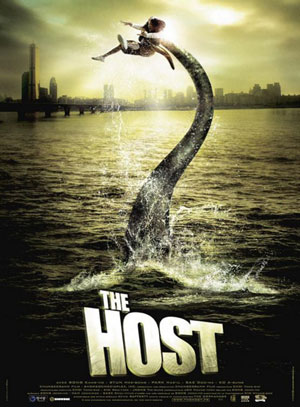
Thoughts On The Host (SPOILERS!!)


"We may be witnessing a Biblical prophecy come true - the beasts will reign over the earth."
-- Dr. Harold Medford from Them!

Bong Joon-ho made The Host for me. He might have thought he was making it for himself, but let us be very clear he made the finest monster film in quite some time. Not since the original Gojira and other early Toho Kaiju films has there been such a reason to celebrate. I give you Jurassic Park, but the American remake of Godzilla is not only bad, but insulting to the mighty reptile. I was going to save this for another blog, but this film has been a long time coming. Bong Joon-ho made Memories of Murder and that was good enough, but that film cannot begin to prepare you for the perfection that is The Host. The two most dangerous books in Western Civilization are Catastrophe: The End of Cinema? and APE: Monster of the Movies by David Annan. I cannot begin to describe the impact of these books that were purchased at a Brentano’s that no longer exists in Chevy Chase, Maryland back around 1975. It all starts with those books. Between those two books, it is all in there. Godzilla, King Kong, Things To Come, Planet Of The Apes, Soylent Green, Them!, Gappa, The Beginning Of the End, The Day The Earth Stood Still and so many others. In Catastrophe, you get Weekend, Alphaville, Roma and other art house films to boot. The books were like a prophecy of demented cinematic bliss. The obsession comes from there. The seeds are planted with loads of images. The love of the monster film starts before these books, but the deal is sealed forever with their purchase. I joked with my Mom earlier this week about these books and how dangerous they turned out to be. She told me I was nuts. She would have bought more of them, if she knew of their true impact.

So what does all this have to do with The Host and the brilliance of South Korean Cinema? The Host is only the latest in a series of films from South Korea that are truly pushing the envelope. Oldboy, Lady Vengeance, Sympathy For Mr. Vengeance, 3-Iron, The Quiet Family, Shiri, Tae Guk Gi: The Brotherhood of War, Memories Of Murder, The President's Last Bang, Joint Security Area and A Tale Of Two Sisters are just a few of the films that have put Korean cinema on the map and made it such a powerful contribution to world cinema. Chan-wook Park's Oldboy made a vivid impression and the hype building up on the internet before it came out drove me insane. I just wanted to see it. I had seen Park's Joint Security Area years before, and was very impressed by it. But Oldboy is one of those Memento moments that sears in your brain and never leaves. Park became an icon by the end of the notorious hammer corridor fight. Korean cinema cane be seen as extreme and its directors push things to edge. Genres are meant to be put in the blender. Rules are meant to be broken. Conventions are meant to be shattered. I do not even think a Japanese director could get away with it, but your Chan-wook Park's and Bong Joon-ho's do not care about rules. They care about telling stories.

The Host is a monster movie, political satire, sheer lunacy and the ultimate in dysfunctional family dynamics. Think Little Miss Sunshine, Godzilla Vs. The Smog Monster, Jaws, Alien, and either version of The Blob all mixed together.
And the film has such an original tone of its own because while it may share some of things from those films, it never wants to be just like them. It pushes the boundaries to a point where you know that you are witnessing the creation of something new and wonderful. Our monster movie begins as a United States military scientist played by Scott Wilson orders a Korean technician (Kim Hak-sun) to dump lots of formal Hyde down the sink several years ago. All because the bottle have dust on them. The formal Hyde goes into the Han River and over the years a great mutant beast has been growing. Cut to the present and we have a mutant tadpole that begins comes out the Han River to terrorize the streets of Seoul. This tadpole has a tale as lethal as Godzilla's. A mutant born of American military might and carelessness.

It is just a normal day for the Park family and their snack bar along the Han River. The Parks make the Hoovers of Little Miss Sunshine seem rather normal. That is quite a thing to pull off. We have the grandfather, Hee-Bong (Byun Hee-bong) and his three adult children: the unemployed white collar worker, Nam-il (Park Hae-il), his archery champion sister, Nam-joo (Bae Doo-na) and the their slacker man-child brother, Gang-du (Song Kang-ho). It is Hee-Bong's granddaughter, Hyun-seo (Ko A-sung) who has her act together. She is all that! She is Gang-du's daughter. He protects her and loves her very much. Gang-du is going out of the snack bar to get some beverages and notices that a lot of people are staring at something hanging from underneath a bridge. It is the monster. No one knows what to make of it. Than it jumps into the river and disappears. Than from behind Gang-du we see people falling into the river and running. The creature is on land. Imagine if Jaws could come on the land. It is a scene of absolute shivering terror. The tadpole can come on land. Meanwhile, Hyun-seo is out and about. Everyone is running and she gets caught up, but Gang-du grabs her as the monster is running toward them. But it is not enough, the monster has taken her. He has grabbed on to the wrong little girl. Has she been devoured by the creature? We think so until a cell phone call is received by her. She is being kept in the monster’s sewer home. How the hell can she get service from the sewer when I cannot even get it from inside most buildings? The family must combine forces to find Hyun-seo because the government, military and police will not help them.

Hyun-seo must have been separated at birth from Ivana Baquero's Ofelia in Pan's Labyrinth. Hyun-seo is the epitome of bravery and resourcefulness. She outwits the monster, by playing dead and trying to find ways to get out while it is gone. The creature swallows its victims and than spits them out to eat later. The sewer is a pit full of skulls and bones of previous victims. The family meanwhile has been forced into a quarantine station with many others from the Han River incident. They manage to escape and become enemies of the state. The government and the United States military claim there is a disease associated with the monster that some of the victims may have. This is a metaphor fro SARS and Avian Bird Flu. Is the government lying? Clearly, Bong does not favor the American military presence in his country. We are the ugly Americans in this film. But authority in general is not portrayed in favorable light. The Park Family must fight with each other, their fellow citizens, and the government and finally deal with the dreaded beast. Their quest to find Hyun-seo is one of last year's best chases in a long time. Each of them will endure the worst possible ordeals to find Hyun-seo.

While Mr. Bong takes the best of old science fiction and horror films that were created out of the Atomic Age, he has done something more remarkable. While the later Godzilla films attempted to tackle the environmental issues in the later films of the first series and the second series of the 1980's and 1990's, they never came off more than high camp. The second series did this a little better, but the Toho was more interested in destroying continuity more than anything else. No other series in the history of pop culture has been re-invented more than the Godzilla films. The Host is a cautionary tale of about the cost of human error and the survival of our planet. The Host is a warning of the true shape of things to come if we do not get our act together.

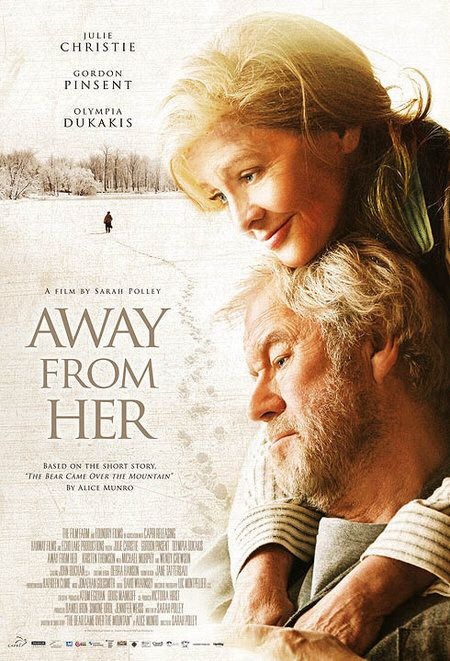
Away From Her: Hal Hartley’s Influnece and Julie Christie’s Eternal Power (Spoilers!!)


“Wouldn't it have been lovely if we'd met before? “
-- Lara Antipova from Doctor Zhivago

“Look, Mr. McCabe, I'm a whore!”
-- Constance Miller from McCabe And Mrs. Miller

“Is it true that a long time ago, firemen used to put out fires and not burn books?”
-- Clarisse from Fahrenheit 451

Who knew that Hal Hartley would have such a dramatic effect on several motion pictures released in 2007? I have not seen his just released, Fay Grim, but I am sure it is a fine follow-up to his 1998 film, Henry Fool. Two of Hartley’s actresses have made two of the finest directorial debuts in recent years. Adrienne Shelly’s directorial debut, Waitress, is bittersweet. Her work in Hal Hartley’s The Unbelievable Truth and Trust remains some of the best raw acting in American independent cinema of the early 1990’s. Shelly picked up a lot from Hartley while serving as his muse. Her Waitress is smart, funny and perfectly sweetened. Shelly could have written the main role for herself, but wrote a career making part for Keri Russell. Still, Shelly gave herself one of her best parts in years as Dawn. The film serves as fine reminder that not all romantic comedies have to aim for the lowest common denominator or star Drew Barrymore. Sadly, Adrienne Shelly was murdered on November 6th of 2006. It depresses me that she is not alive to see and reap the rewards of her greatest work. Shelly’s work in Hartley’s films was iconic. Her death is a loss of so many great future works-- the loss of a great mother, wife, actress, writer and director.

I had no problem with Hal Hartley’s 2001 film, No Such Thing. If I would have known that Sarah Polley would some day direct Julie Christie in a film, I would have said, “faster, more intense.” Sarah Polley not only channeled Hal Hartley while making Away From Her, but also Atom Egoyan who directed her in The Sweet Hereafter and Exotica.. It helps that Mr. Egoyan serves as an executive producer on the film. While I see traces of both director’s style in her film, I see an original voice as well. Sarah Polley, like Shelly before her, has crafted an unexpected tale for us. Polley has adapted the film from Alice Munro’s short story, “The Bear Who Came Over The Mountain.” Sarah Polley has always had a keen eye for the material she chose as actress. The Sweet Hereafter, Go, Last Night, The Weight Of Water, Guinevere, Existenz, Don’t Come Knocking, My Life Without Me and The Adventures of Baron Munchausen represent a diverse selection of films for such a young actress. She brings a lot of class to her most mainstream film, Zach Snyder’s 2004 remake of Dawn Of The Dead. She had the chance to work and observe Wim Wenders, David Cronenberg, Terry Gilliam and Doug Liman as well. Sarah Polley’s accomplishes a lot with her film. A film about a couple struggling with the devastating effects of Alzheimer's Disease has the potential to feel like a television movie of the week. Yet, the film never has that feel at all.

The story of Fiona (Julie Christie) and Grant (Gordon Pinsent) feels fresh. The film follows the Ontario couple who been married forty years. In their twilight years, Fiona begins to forget things. Little things at first, but one night she wanders away and gets lost. Grant has to go look for her. It is decided that a nursing home is the best solution. Their marriage is about endure its greatest test. The nursing home has a strict no visitors policy for the first thirty days. This required so new patients can get a feel for their surroundings. This forced long term separation will have horrible results for Grant. When he returns to the nursing home, Fiona has forgotten who is he and she has affections for a fellow patient, Aubrey (Michael Murphy), a wheelchair bound mute. Fiona is moving away from Grant. Can he get her back? Is he willing to make a very important self sacrifice? Grant must make painful choices to ensure Fiona’s happiness. Grant’s scenes with Aubrey’s wife, Marian (Olympia Dukakis) are an unexpected pleasure. It never dawned on me that the film would take this route. The film’s view of Alzheimer’s disease is frightening. The loneliness and depression of the nursing home is vividly depicted in the film. The destructive havoc that the disease is subtle, but powerful. With other actors and another director, the film might not work.

Julie Christie’s performance as Fiona ranks up there with some of her greater performances. There is a lot of Oscar buzz for her performance as Fiona. She was nominated for her part in Alan Rudolph’s 1998 film, Afterglow as well. Do not call it comeback, Julie Christie has never phoned it in. Her work in Finding Neverland and No Such Thing deserves mention. Wolfgang Peterson wasted her and Peter O’Toole in Troy.
I always thought I had discovered her in David Lean’s Doctor Zhivago back in high school. Her Lara remains one of the best reasons to major in English in college. Lara is the ultimate muse. But I discovered her much earlier in Demon Seed and Fahrenheit 451. Two science fiction cult classics directed by David Cronenberg and Francois Truffaut respectively. She won an Oscar for her work in Darling in 1965. As Diana Scott, she is the epitome of the Swinging Sixties period in London’s fashion scene in John Schlesinger’s film. She was great opposite Tom Courtenay in Billy Liar. Warren Beatty would be one of her best leading men. Their work together in McCabe And Mrs. Miller, Shampoo and Heaven Can Wait remains some of the best and smartest chemistry onscreen. The Go-Between, Far From The Madding Crowd and Don’t Look Now only remind us of how powerful her presence is over the years. Fiona is a wonderful addition to a long list of triumphant screen roles. Fiona is an older Lara, Constance Miller, Phyllis Mann and Jackie Shawn. We have been blessed to have witnessed a great actress deliver five decades of incredible work and no signs of slowing down. I am sure people will want to compare her work in this film to Peter O’Toole’s Oscar nominated role in last year’s Venus. On the surface that may be a fair comparison, but Christie has never lost her edge. It is as though that Lara has never left the building.

Add This

Bookmark and Share

RSS Feed

AddThis Feed Button